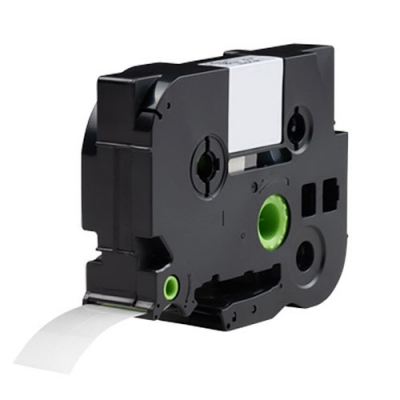
χρυσό σε διαφανές
Αυτή η μελανοταινία κεριού/ρητίνης αποτελεί την ενδιάμεση λύση μεταξύ κεριού και ρητίνης: είναι πιο ανθεκτική στις γρατζουνιές, στην υγρασία και στα ήπια χημικά από μια μελανοταινία αμιγούς κεριού, αλλά πιο οικονομική από μια μελανοταινία αμιγούς ρητίνης. Δεν είστε σίγουροι αν πρέπει να επιλέξετε κερί ή ρητίνη, ή θέλετε μια ετικέτα που να αντέχει λίγο περισσότερο χωρίς το υψηλότερο κόστος της ρητίνης; Τότε αυτή είναι μια καλή ενδιάμεση επιλογή. Αυτή η μελανοταινία έχει διαστάσεις 110 mm × 300 m.
Η διαφορά από τη μελανοταινία αμιγούς ρητίνης βρίσκεται στο επίπεδο προστασίας: το κερί/ρητίνη είναι κατάλληλο για επιστρωμένο χαρτί και ορισμένα πλαστικά, και αντέχει στην ελαφριά τριβή και την περιστασιακή επαφή με υγρασία ή χημικά. Για ετικέτες που υπόκεινται σε έντονη καταπόνηση, όπως σε εξωτερικούς χώρους, σε βαρέλια χημικών ουσιών ή σε συσκευασίες από καθαρό πλαστικό, η καθαρή ρητίνη παραμένει η καλύτερη επιλογή. Πρόκειται για απλές ετικέτες χωρίς ειδικές απαιτήσεις; Τότε το κερί κοστίζει λιγότερο.
Αυτή η μελανοταινία χρησιμοποιείται με εκτυπωτή θερμικής μεταφοράς: η κεφαλή εκτύπωσης λιώνει την επίστρωση κεριού/ρητίνης της μελανοταινίας πάνω στην ετικέτα, προσφέροντας ευκρινή εκτύπωση με μεγαλύτερη αντοχή στη φθορά από μια μελανοταινία αμιγούς κεριού.
Συμβατότητα γενικής χρήσης: κατάλληλη για τους περισσότερους εκτυπωτές ετικετών που υποστηρίζουν αυτή τη μορφή μελανοταινίας, όπως Zebra, Honeywell, TSC, Godex, Citizen και άλλους.
Yes, that's exactly where wax/resin does better than plain wax. It's commonly used on coated paper labels and a range of plastic label materials, where the exact suitability depends on the surface and coating of the label stock in question.
For fully synthetic labels under demanding conditions (chemicals, heat, heavy wear), a pure resin ribbon still performs better; wax/resin is the practical middle option for everyday coated and plastic labels.
Yes, that's one of the main reasons to choose wax/resin over plain wax. The print holds up noticeably better against light rubbing, fingerprints and general handling than a wax print does.
For labels that are only occasionally touched, wax is often sufficient. For labels that are picked up, scanned or wiped regularly, or that need to stay legible over a longer period, wax/resin's extra scratch resistance is worth the small price difference.
Price mostly follows the ink formulation and the temperature needed to transfer it. Wax melts at a low temperature and is the cheapest to produce. Resin needs the most heat and the most specialised ink, making it the most expensive. Wax/resin combines both ingredients, landing in between on both manufacturing cost and print durability.
In practice, this means you're paying for exactly the level of durability you need: wax/resin costs more than wax because it does more, and less than resin because it doesn't need to do as much.